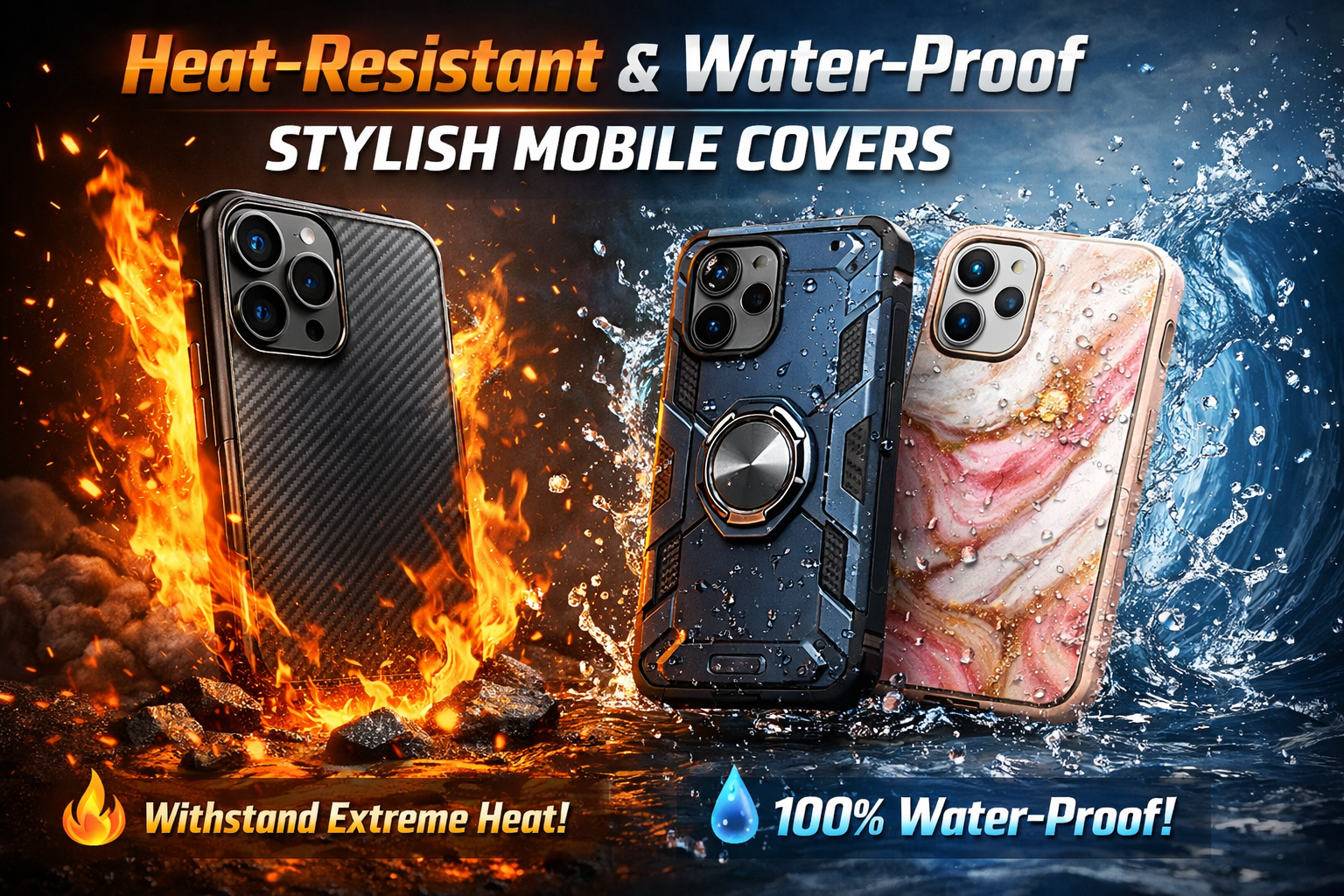
Heat-Resistant & Water-Proof Stylish Mobile Covers: My phone slipped from my hand during last year’s Holi celebrations. It landed screen-first on the marble floor, then got splashed with colored water within seconds. I picked it up expecting the worst—cracked screen, water seeping into the charging port, game over. Nothing happened. The case took the hit, water rolled right off, and my phone kept working like nothing had occurred.
That ₹899 cover saved me from spending ₹15,000 on repairs or buying a new phone altogether. But here’s what surprised me: most people I know either use flimsy covers that do nothing, or they don’t understand what makes a protective case actually work in Indian weather conditions.
Why Indian Summers Are Brutal for Your Smartphone
Delhi hits 47°C in May. Mumbai combines 38°C with 80% humidity. Phones left in cars, pockets, or even just used outdoors during peak afternoon hours start showing serious problems.
What extreme heat does to your phone:
- Battery drains 2-3x faster than normal
- Phone suddenly dies at 20-30% charge
- Apps crash or freeze without warning
- Camera stops working until device cools
- Performance throttles to prevent damage
- Charging becomes slow or stops completely
I’ve watched friends’ phones literally shut down at afternoon cricket matches because the device got too hot to function. Your smartphone’s ideal operating temperature sits between 0°C and 35°C. Anything above that creates stress on components, especially the battery.
How heat-resistant covers protect:
- Reflective surfaces bounce sunlight away before it penetrates
- Air channels allow trapped heat to escape
- Non-conductive materials prevent hot surfaces from transferring heat to your phone
- Textured or matte finish reduces heat absorption
Think of it like the logic behind a clay matka keeping water cool. The case material creates a barrier between external temperature and your phone’s internal components. When I upgraded to a proper heat-management case last summer, my phone stopped giving me those “device needs to cool down” notifications during navigation rides.
Monsoon Season: When Waterproofing Becomes Essential
Getting caught in Mumbai’s monsoon downpour with an unprotected phone is playing Russian roulette with your device. Bangalore’s sudden evening showers. Kerala’s heavy rainfall season. Delhi’s unexpected thunderstorms during transition months.
Signs of water damage (often permanent):
- Charging ports stop working after 2-3 days
- Speakers sound muffled or crackly
- Camera lens develops fog inside
- Screen gets dead spots or discoloration
- Phone randomly restarts or won’t turn on
- Corrosion begins within hours even if phone seems fine initially
Three layers of waterproof defense:
1. Outer Seal
- Prevents water from entering around edges
- Quality rubber gaskets create tight fit
- No gaps when case closes properly
2. Port Covers
- Keep moisture away from charging points and headphone jacks
- Must snap firmly shut (not loose flaps)
- Most vulnerable point that needs regular checking
3. Speaker Membranes
- Special material allows sound to pass through
- Blocks liquid from entering
- Maintains audio quality while protecting
Most cases claiming “waterproof” in India actually mean water-resistant. True waterproofing requires IP67 or IP68 certification that’s actually tested, not just printed on cheap packaging. During last year’s Kerala floods, a relative’s phone survived being submerged in muddy water for nearly ten minutes because of a genuinely waterproof IP68-rated case.
That Shockproof Cover That Saved Everything
Back to my Holi incident. The case had reinforced corners made from rubber-like material that compressed when it hit the floor. This absorbed the impact energy—the same principle behind why we fall on gym mats instead of concrete. The edges rose slightly above the screen level, so when my phone landed face-down, the screen never actually touched the marble.
Three elements that make shockproof protection work:
1. Reinforced Corners
- Absorb 90% of impact damage from typical drops
- Made from soft, flexible material (TPU or silicone)
- Compress on impact to absorb energy
- Most drops hit corners first
2. Raised Bezels
- 1-2mm elevation around screen and camera
- Prevent direct contact when phone lands face-down
- Create protective “lip” around vulnerable areas
- Essential for screen protection
3. Dual-Layer Construction
- Inner soft layer absorbs shock
- Outer hard layer distributes impact force
- Works together like a car’s crumple zone
- Better than single-material cases
I’ve dropped my current phone at least six times in the past year—train platforms, bathroom tiles, parking lots. The case shows wear and scratches, but the phone underneath remains pristine. Each scuff mark represents a repair bill I didn’t have to pay.
What to Actually Look For When Buying in India
Walk into any mobile accessories shop in Nehru Place, Lamington Road, or Richie Street, and you’ll see hundreds of covers ranging from ₹150 to ₹3,000. The variety overwhelms most buyers who just want genuine protection.
Six quick checks before buying:
1. Material Thickness
- Bend the case slightly in the shop
- Should have rigidity with corner flexibility
- Flimsy plastic won’t protect drops
2. Port Cover Quality
- Open and close them 5-6 times
- Must move smoothly but close securely
- Loose covers = water gets in
3. Certification Marks
- Look for IP67/IP68 (water resistance)
- Check for MIL-STD-810G (drop protection)
- Printed labels without testing are worthless
4. Grip Texture
- Should provide friction without stickiness
- Matte finish better than glossy
- Critical for sweaty hands in summer
5. Button Responsiveness
- Press volume and power buttons through case
- Should click clearly without excessive force
- Mushy buttons get annoying daily
6. Raised Screen Edges
- Run finger across screen area
- Case edges must be higher than screen
- Prevents contact with flat surfaces
Price reality in India:
- ₹499-₹799: Decent basic protection
- ₹999-₹1,500: Good quality with certifications
- ₹1,800-₹2,500: Premium with full waterproofing
- Under ₹300: Probably lying about protection claims
Anything claiming military-grade drop protection and IP68 waterproofing for ₹250 is cutting corners somewhere critical.
Style Doesn’t Have to Mean Compromise Anymore
Five years ago, protective cases looked industrial and bulky. You chose between style and safety. That’s changed completely now.
Popular stylish mobile cover designs available:
- Transparent cases with colored bumpers
- Minimalist matte finishes in solid colors
- Leather-texture options with hidden protection
- Marble or wood-grain patterns on shock-absorbing base
- Gradient colors that resist UV fading
Brands like like CoverArts now offer covers that look premium while providing serious protection. My current case looks sleek—solid black with subtle texture. Nobody would guess it’s survived multiple drops and a water spill.
Design features that work in Indian conditions:
Dust Resistance
- Fewer crevices = less lint collection
- Smooth surfaces clean with quick wipe
- Essential in Delhi, Jaipur, Ahmedabad
Color Stability
- Quality materials don’t yellow in 3-4 months
- UV and heat resistance built into material
- Cheap clear cases turn ugly fast
Slim Profile
- Modern cases add only 2-3mm thickness
- Fits easily in jeans pockets and purses
- Old bulky designs added 5-6mm
Grip Patterns
- Crosshatch, diagonal lines, or micro-dots
- Prevents slipping from sweaty hands
- Works without feeling sticky
The aesthetic matters because you’re looking at this case every day. If it’s ugly, you’re tempted to remove it, which defeats the entire purpose of protection.
Common Mistakes That Waste Money
Buying based on looks alone: That gorgeous marble-pattern case might offer zero impact protection without reinforced corners. Always check material and construction underneath the design.
Ignoring port accessibility: Some cases make charging inconvenient every single day. Others block headphone jacks or card slots. Test daily actions in-store before buying.
Trusting “military grade” claims blindly: Marketing terms get thrown around freely. Actual MIL-STD-810G requires specific testing and certification. Many cases use the phrase without meeting any standard.
Replacing cheap cases repeatedly: Buying ₹300 cases every 3 months costs ₹1,200 yearly. One ₹1,000 quality case lasting 18 months provides better value and superior protection.
Not matching case to lifestyle: Office workers need drop protection more than heat resistance. Delivery riders require heat and water resistance combined. Construction workers need maximum shock absorption. Students benefit from balanced protection across all features.
How Long Do These Cases Actually Last?
Component lifespan breakdown:
Waterproof Seals: 18-24 months
- Degrade faster in heat and humidity
- Case still protects drops but loses water resistance
- Check every 6 months for deterioration
Port Covers: 12-18 months
- Wear out fastest from daily charging
- If they don’t snap shut firmly, water seeps in
- First component showing visible wear
Shock-Absorbing Materials: 2-3 years
- Corner protection maintains effectiveness longest
- Hard outer shell rarely degrades functionally
- May show cosmetic scratches but still protects
When to replace immediately:
- Port covers feel loose or damaged
- Visible cracks in case material anywhere
- Edges no longer rise above screen level
- After severe drop (inspect for hidden damage)
I replace protective cases roughly every 18 months, not because they stop protecting against drops, but because waterproof seals lose effectiveness. Given that these cases prevent damage costing thousands of rupees, the replacement cost feels completely justified.
Real-World Testing: What Actually Happens
I intentionally tested my current case’s limits to understand what it can handle in real situations.
Heat test in Gurgaon summer:
- Left phone in car parked in direct sun
- Duration: 45 minutes in June afternoon
- Case exterior: Hot to touch
- Phone inside: Normal operating temperature
- Result: Heat barrier worked perfectly
Water test during monsoon:
- Held under running tap for 30 seconds
- All port covers closed properly
- Opened case after 5 minutes
- Result: Completely dry inside
Drop test on bathroom tiles:
- Dropped from waist height
- Landed screen-first on hard surface
- Result: Not even a scratch visible
These aren’t extreme laboratory tests—they’re situations that happen accidentally in normal life. A truly protective case handles them without drama or damage.
The monsoon season reveals the real difference between marketing claims and actual protection. I’ve been caught in sudden downpours three times last year. Each time, my phone stayed completely dry despite clothes getting soaked. Friends with regular cases either ruined their phones or had to turn them off immediately and hope for the best.
The Value Proposition: Simple Math
Cost comparison in Indian market:
- Quality protective case: ₹899 to ₹1,499
- Screen replacement: ₹3,000 to ₹12,000 (model dependent)
- Water damage repair: ₹5,000 to ₹8,000 (if even possible)
- New phone purchase: ₹15,000 to ₹80,000
Even if the case prevents just one accident during your phone’s lifetime, it pays for itself multiple times over. Most phones face 2-3 potentially damaging situations over 2-3 years of normal use.
What my ₹1,000 case actually saved:
- Holi marble floor drop: ₹8,000 screen replacement avoided
- Monsoon rain exposure: ₹6,000 water damage repair avoided
- Car parking lot drop: ₹4,000 back panel replacement avoided
- Total saved: ₹18,000 from ₹1,000 investment
That’s an 18:1 return on investment, and I still have the same phone working perfectly after all these incidents.
What You Should Do Next
Look at your current phone case, like i choose for my Vivo V60 case honestly. Does it actually protect, or is it just decoration? Can it handle Indian summer heat, monsoon rain, and the inevitable drops that happen to everyone?
Your case must have these five features:
- Reinforced corners with soft, shock-absorbing material
- Raised bezels around screen and camera (1-2mm minimum)
- Secure port covers that snap shut firmly
- IP67 or IP68 certification printed on packaging
- Good grip texture (not slippery smooth plastic)
Recommended brands available in India:
Premium Tier
Red flags to avoid completely:
- Prices too good to be true (₹250 for “IP68 military grade”)
- No brand name or certification mentioned anywhere
- Sellers with mostly negative reviews
- Cheap packaging with spelling errors
Your phone is probably worth between ₹15,000 and ₹50,000. Protecting it with a ₹1,000 case is basic common sense, especially given how we use phones in India—outdoors in extreme heat, during monsoons, on crowded public transport where drops happen constantly.
That Holi incident taught me something valuable. The best phone protection is the one you’re actually using when the accident happens. Buy a case that protects well and looks good enough that you’ll never be tempted to remove it. Your future self will thank you when the inevitable drop, splash, or overheat situation occurs and your phone survives completely unharmed.